
The Petoskey Area Guide to Fall and Winter Stargazing
October 6, 2025
Stargazing in the colder months? Absolutely! Our guide will show you the best spots for viewing supermoons and meteors when skies are dark and stars put on a show.
The stars have guided us for millennia.
Imagine you’re in ancient Greece, using the stars for navigation at sea and timing the planting of your crops. Your fellow Greeks have named constellations that might be familiar today: Orion, Cassiopeia, Pegasus, Ursa Major. You follow the constellations known now as the Zodiac through the sky, and know the myths associated with their names and shapes.
Or picture life as a Polynesian islander. You use a star compass and other intricate environmental cues to make epic seafaring journeys. Your navigational skills are legendary.
What about using the moon as a marker of seasonal events and cultural knowledge? Anishinaabe in the Petoskey area still use the traditional teachings of the 13 annual moons, illuminated by the illustrious star of our own solar system.
Maybe you’re someone who’s into astrology in the present day? In that case, celestial bodies and horoscopes mean a great deal to you.
If you want to gaze at the broad swath of the Milky Way on a moonless night or watch Orion finally emerge from his summer slumber, why not try stargazing in the Petoskey area?
Fortunately for visitors and residents alike, we have a few prime spots that are just perfect for stargazing or catching a magical meteor shower. Our guide is here to offer you the best opportunities for night sky happenings this fall and winter.
Meteors, supermoons, and the elusive aurora
First off, let’s talk about the moon. The last few moons of the year are scheduled to be “supermoons,” meaning they look about 14% bigger and 30% brighter than “micromoons.”
What’s the difference between super- and micromoons? Supermoons happen when the full moon’s orbit brings it close to Earth, making the moon appear larger. You can see micromoons when the moon and Earth are further apart.
 The rest of the 2025 supermoons will happen November 5, and December 4. The October 6 supermoon, which you may have already witnessed, was also known as the Harvest Moon. The first supermoon of 2026 will show up January 3.
Speaking of moons, have you ever encountered the 13 moons of the Anishinaabe calendar? Indigenous people in the Petoskey area have embedded ecological signals and traditional teachings into the 13 annual moons. The October moon is called the Falling Leaves Moon, a time for preparing the harvest. November is the month of the Freezing Moon, and December bears the Little Spirit Moon.
This fall and winter are also bringing out the best in the night sky. NASA calls the Orionid meteors, which this year are active between October 2 and November 12, “one of the most beautiful showers of the year.” The showers come from space debris from Halley’s Comet, and they’re visible between midnight and dawn, peaking around October 22.
Throughout October and November, when the Earth passes, through debris left by asteroid 2004 TG10 and Encke’s Comet, the North and South Taurid meteor showers will be visible. While there are only a few meteors per hour from these showers, some of them may be showy fireballs.
The rest of the 2025 supermoons will happen November 5, and December 4. The October 6 supermoon, which you may have already witnessed, was also known as the Harvest Moon. The first supermoon of 2026 will show up January 3.
Speaking of moons, have you ever encountered the 13 moons of the Anishinaabe calendar? Indigenous people in the Petoskey area have embedded ecological signals and traditional teachings into the 13 annual moons. The October moon is called the Falling Leaves Moon, a time for preparing the harvest. November is the month of the Freezing Moon, and December bears the Little Spirit Moon.
This fall and winter are also bringing out the best in the night sky. NASA calls the Orionid meteors, which this year are active between October 2 and November 12, “one of the most beautiful showers of the year.” The showers come from space debris from Halley’s Comet, and they’re visible between midnight and dawn, peaking around October 22.
Throughout October and November, when the Earth passes, through debris left by asteroid 2004 TG10 and Encke’s Comet, the North and South Taurid meteor showers will be visible. While there are only a few meteors per hour from these showers, some of them may be showy fireballs.
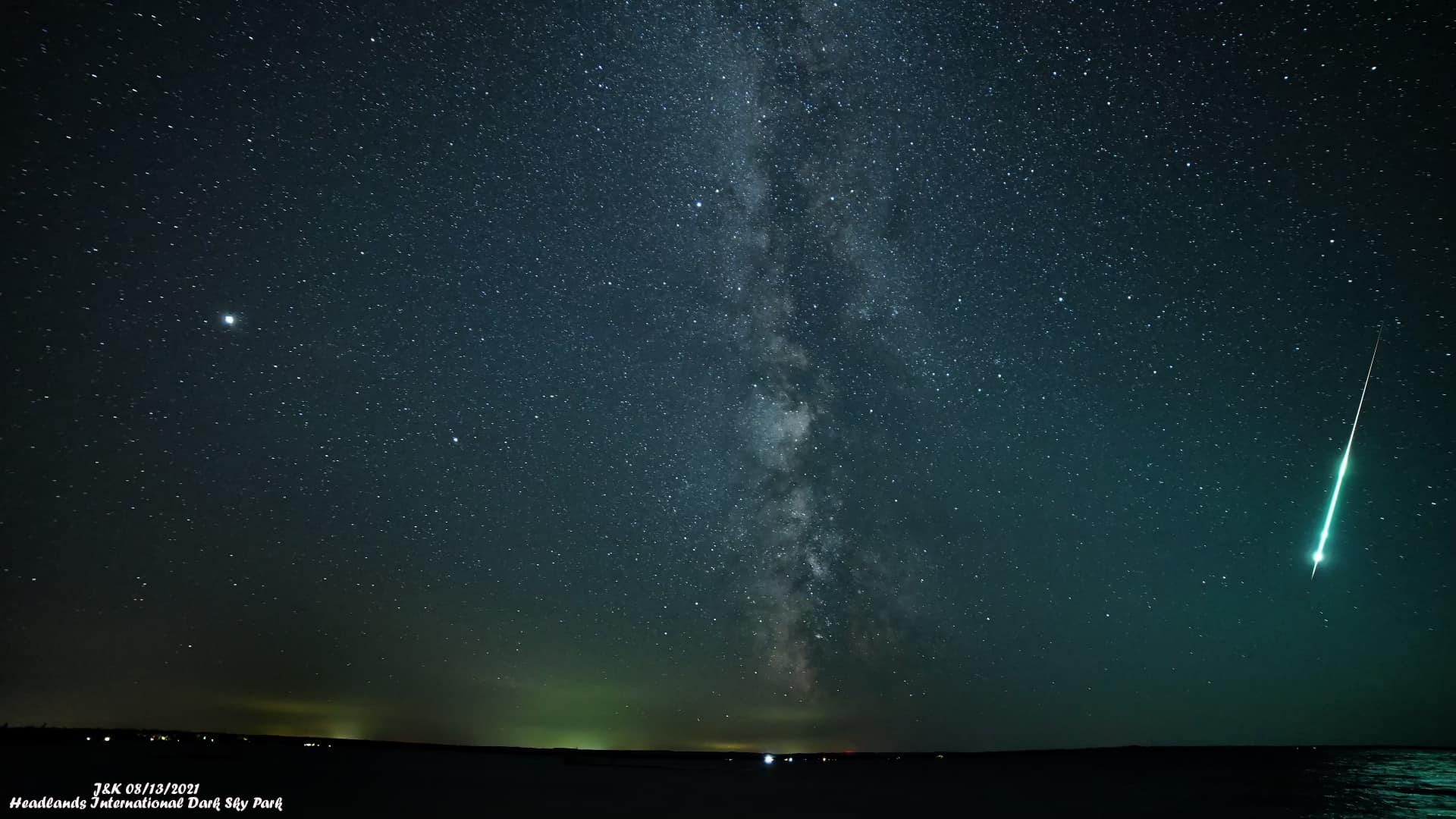 The next meteor showers on the docket are the Leonids, which peak during mid-November and travel around 44 miles per second, according to NASA. These meteors should begin showing up November 3 in 2025, and they ramp up around midnight. They’re known for their fireballs, leaving traces of light across the sky.
In December, the Geminids arrive. Considered to be one of the most prolific showers, you can bundle up and catch them for most of December, with their peak of over 100 meteors per hour around the 12th or 13th. The best part: The Geminids, which originate from the asteroid 3200 Phaethon, are burning through the atmosphere throughout the day, so you don’t have to stay up late to catch a glimpse.
Interested in one last meteor shower? The Quadrantids peak January 3, 2026. This is another shower that comes from an asteroid, in this case 2003 EH1. While there can be hundreds of asteroids in the sky during the Quarantids peak, it only lasts for a few hours.
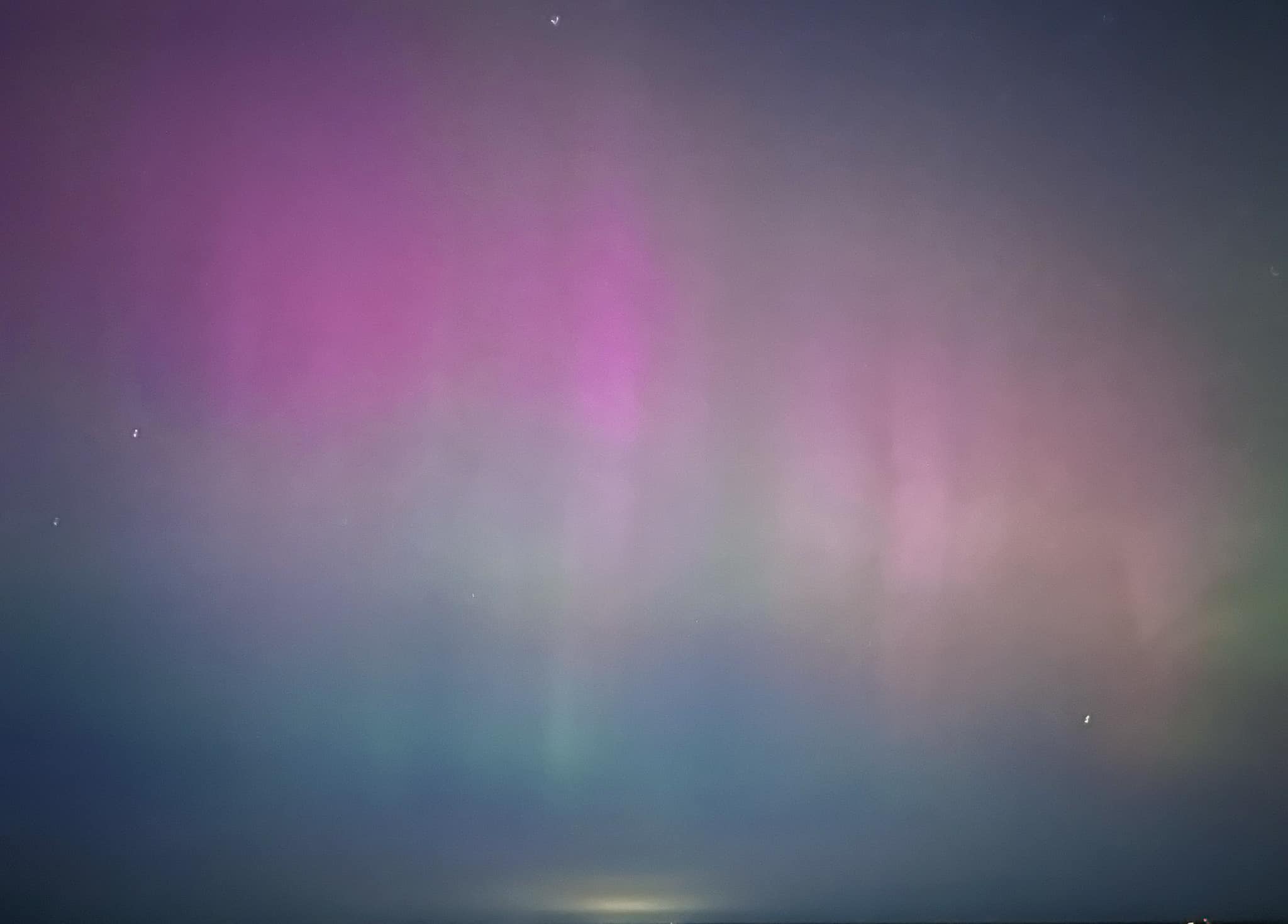
What about the aurora borealis? If you’ve never had the pleasure of being acquainted with the aurora, it’s a phenomenon caused by interactions between the earth’s magnetic shield and solar winds from the sun. Different gases in the atmosphere give the aurora its magical, shimmering colors.
The best way to view the aurora is to stay alert for geomagnetic activity. The National Oceanic and Atmospheric Administration provides a 30 and 90-minute aurora forecast model that can help.
Images of the aurora as seen from northern Michigan are all over social media. One thing to keep in mind: many aurora images are taken with the widest aperture and slow shutter speed, and might not be visible to the naked eye.
The next meteor showers on the docket are the Leonids, which peak during mid-November and travel around 44 miles per second, according to NASA. These meteors should begin showing up November 3 in 2025, and they ramp up around midnight. They’re known for their fireballs, leaving traces of light across the sky.
In December, the Geminids arrive. Considered to be one of the most prolific showers, you can bundle up and catch them for most of December, with their peak of over 100 meteors per hour around the 12th or 13th. The best part: The Geminids, which originate from the asteroid 3200 Phaethon, are burning through the atmosphere throughout the day, so you don’t have to stay up late to catch a glimpse.
Interested in one last meteor shower? The Quadrantids peak January 3, 2026. This is another shower that comes from an asteroid, in this case 2003 EH1. While there can be hundreds of asteroids in the sky during the Quarantids peak, it only lasts for a few hours.
What about the aurora borealis? If you’ve never had the pleasure of being acquainted with the aurora, it’s a phenomenon caused by interactions between the earth’s magnetic shield and solar winds from the sun. Different gases in the atmosphere give the aurora its magical, shimmering colors.
The best way to view the aurora is to stay alert for geomagnetic activity. The National Oceanic and Atmospheric Administration provides a 30 and 90-minute aurora forecast model that can help.
Images of the aurora as seen from northern Michigan are all over social media. One thing to keep in mind: many aurora images are taken with the widest aperture and slow shutter speed, and might not be visible to the naked eye.
 Fantastic sky views and where to find them
The Petoskey area boasts one of the best places in the country to stargaze: the Headlands International Dark Sky Park.
We’ve featured the Headlands before in our comprehensive guide to enjoying the park. And it’s back!
As Park Manager Jamie Westfall noted in our guide, many people are unaware of the gorgeous mysteries awaiting them in the night sky. That is, unfortunately, because of light pollution. Even smaller cities like Alanson and Harbor Springs have too much light pollution to view an unadulterated night sky.
That’s where the Dark Sky Park comes in. It’s an intentionally dark area where white lights from cell phones and flashlights aren’t permitted in viewing areas to help people more clearly see the stars.
The Headlands is open 24/7, year-round, and there are mile of trails on the property, including along Lake Michigan’s shoreline. While it will be chilly during the winter months, Westfall said folks are welcome to spend time past nightfall to catch a glimpse of meteor showers or famed constellations.
Her biggest suggestion for winter stargazing: Bundle up!
“That means ski socks, leggings, snow pants, layers, a winter jacket, ear protection, gloves, mittens, and a folding chair so you don’t have to sit in the snow,” Westfall said. “We still require red lights in the viewing area in the winter, but there aren’t many people around. The woods can feel spooky when you’re alone, so consider bringing a buddy and a thermos of hot cocoa.”
Here are more tips to make the best of your Headlands trip:
Fantastic sky views and where to find them
The Petoskey area boasts one of the best places in the country to stargaze: the Headlands International Dark Sky Park.
We’ve featured the Headlands before in our comprehensive guide to enjoying the park. And it’s back!
As Park Manager Jamie Westfall noted in our guide, many people are unaware of the gorgeous mysteries awaiting them in the night sky. That is, unfortunately, because of light pollution. Even smaller cities like Alanson and Harbor Springs have too much light pollution to view an unadulterated night sky.
That’s where the Dark Sky Park comes in. It’s an intentionally dark area where white lights from cell phones and flashlights aren’t permitted in viewing areas to help people more clearly see the stars.
The Headlands is open 24/7, year-round, and there are mile of trails on the property, including along Lake Michigan’s shoreline. While it will be chilly during the winter months, Westfall said folks are welcome to spend time past nightfall to catch a glimpse of meteor showers or famed constellations.
Her biggest suggestion for winter stargazing: Bundle up!
“That means ski socks, leggings, snow pants, layers, a winter jacket, ear protection, gloves, mittens, and a folding chair so you don’t have to sit in the snow,” Westfall said. “We still require red lights in the viewing area in the winter, but there aren’t many people around. The woods can feel spooky when you’re alone, so consider bringing a buddy and a thermos of hot cocoa.”
Here are more tips to make the best of your Headlands trip:
 About the Author: Jen DeMoss is a newcomer to the Petoskey area and loves northern Michigan. You can catch her paddling a canoe, hiking a trail, or swimming in Lake Michigan as often as the weather cooperates. She’d love to help you make the most of your time in this paradise she now calls home.
Winter moongazing at the Headlands International Dark Sky Park. Photo credit to Headlands International Dark Sky Park
This photo from the Perseids meteor shower in 2021 shows how spectacular the light show can be at the Headlands. Photo credit: Headlands International Dark Sky Park
A glorious aurora sighting in fall 2025, taken with a timed exposure. Photo credit: Headlands International Dark Sky Park
- Visit when the moon phase is 25% illumination or less. Ideally, no moonlight is best.
- Clear skies are best. Keep an eye on the forecast for Emmet County, and search for weather in Mackinaw City.
- Bring a red flashlight.
- Consult a constellation app or star chart for identifying constellations in the sky. No staff are available in the winter months.
- The visitor center is closed.
- Bathrooms are open at the base of the observatory tower at the Waterfront Event Center, but the walks are not always cleared.
About the Author: Jen DeMoss is a newcomer to the Petoskey area and loves northern Michigan. You can catch her paddling a canoe, hiking a trail, or swimming in Lake Michigan as often as the weather cooperates. She’d love to help you make the most of your time in this paradise she now calls home.